
Requirements for SHA plans in construction - complete overview
In construction projects, the Building Owners' Regulations require that a SHA plan be prepared before construction work commences. The plan must, among other things, describe how risk factors in the project will be handled, cf. Section 8 of the Building Owners' Regulations.
But what should a SHA plan actually contain – and what requirements apply in practice?
Below we review key requirements for content in a SHA plan for construction and civil engineering.

Requirements for SHA plans according to the Building Owners' Regulations Section 8
The requirements for a SHA plan are set out in Section 8 of the Building Owners' Regulations. The provision requires the building owner to prepare a written plan before the start of construction work. The plan must describe the project's risks and how these will be handled.
According to Section 8, the SHA plan shall, among other things:
describe the organization of the work
contain a progress plan
identify work that may involve particular danger
specify specific measures to reduce risk
The plan must be project-specific, updated when changes occur, and be available on the construction site throughout the project period.
1. Organization of HSE work in the project
In practice, this means that the SHA plan must clearly show who has which roles and responsibilities in the project.
This includes, among other things:
Who is the builder?
Who is the SHA coordinator?
Who is responsible at the contractor?
Contact information for responsible actors
A clear organizational chart and documented responsibilities reduce the risk of misunderstandings and lack of follow-up.
2. Progress plan with risk assessment
When considering requirements for content in a SHA plan, it is important that the plan is project-specific and concrete. General formulations are not sufficient to meet the requirements of the regulations.
The plan must include a progress schedule that shows:
When various work operations are to be carried out
What activities can influence each other
Where dangerous situations may arise during simultaneous work
This is especially important in projects with multiple contractors.
3. Risk factors to be described in the SHA plan
A key part of the SHA plan is to identify work that may pose particular hazards.
Examples could be:
Working at height
Working in trenches or shafts
Blasting work
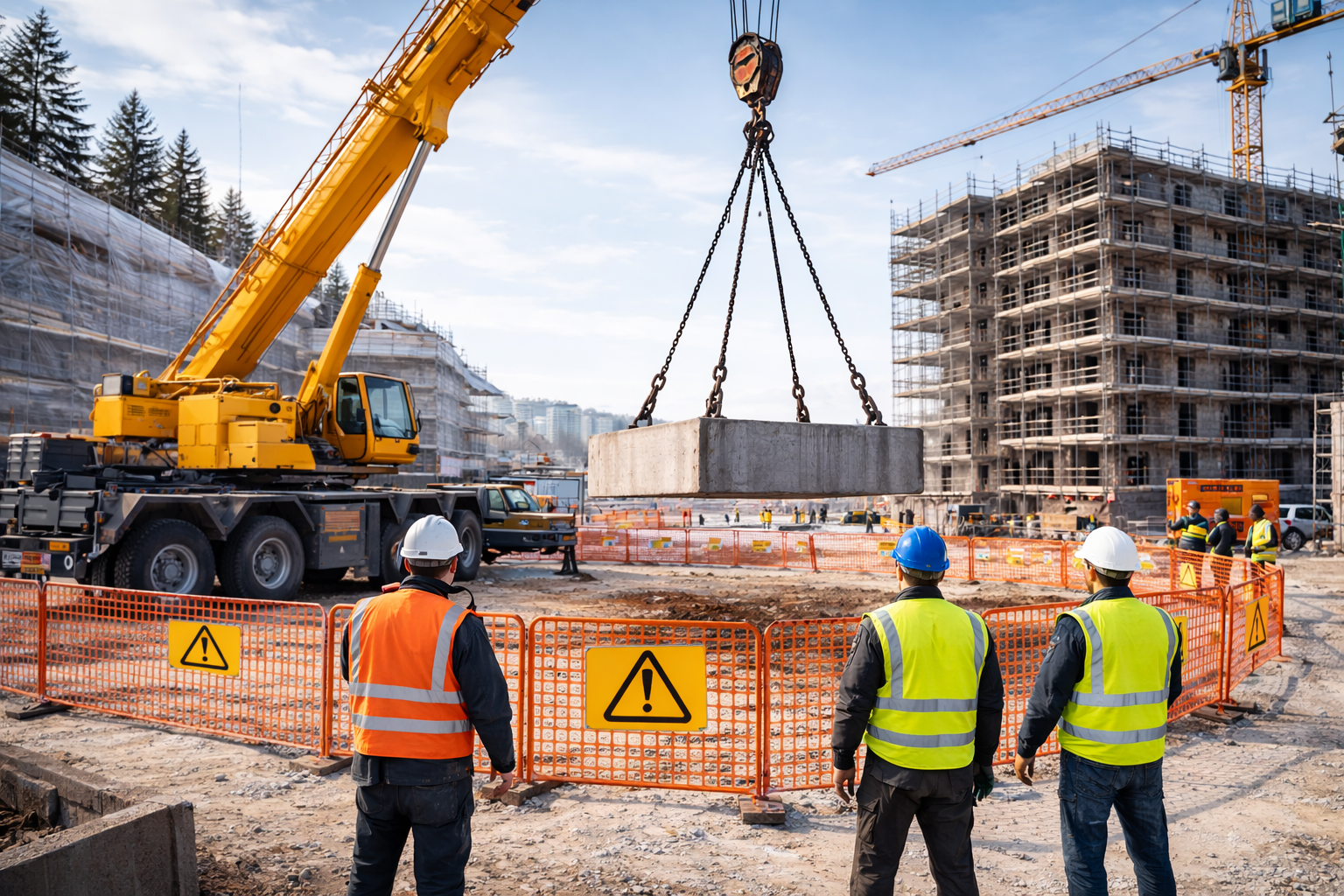
Heavy lifting work
Working near high voltage or traffic areas
For each risk, specific measures to reduce the danger must be described.
In practice, risk assessments and safe job analyses (SJA) will be key tools for identifying and reducing risk.
👉 Read more about what an SJA is and when to use it.
4. Measures to reduce risk
The SHA plan should describe:
Preventive measures
Security measures
Use of protective equipment
Requirements for competence and training
Barriers and access control
The measures must be specific and adapted to the project.
5. Procedures for deviations and follow-up
The plan should also describe:
How to report discrepancies
Who follows up on events?
How measures are documented
How the plan is updated when changes occur
The SHA plan should be an active document throughout the project.
Effective follow-up requires clear routines for registering, processing and closing deviations.
👉 Read more about non-conformance management in construction.
6. Update and availability
A SHA plan should:
Be available at the construction site
Updated when progress or risk changes
Revised as needed
The client has the overall responsibility for ensuring that the plan is prepared and followed up.
What is the difference between a SHA plan and an HSE plan?
A SHA plan is project-specific and applies to safety, health and the working environment at the specific construction site.
An HSE plan applies to the company's systematic HSE work over time.
👉 Read more about the difference between HSE plan and SHA plan here.
👉 If you want a detailed review of what an HSE plan must actually contain in construction, you can read our article about HSE plans in construction.
Why is a clear SHA plan important?
A well-prepared SHA plan:
Reduces the risk of serious incidents
Clarify responsibilities
Contributes to better coordination between actors
Ensures compliance with building regulations
In larger projects, digital tools can make it easier to collect documentation and follow up on measures throughout the project period.
Is there a template for a SHA plan?
Many people search for a SHA plan template. There are various templates available, but in practice it is rarely sufficient to use a general standard template.
The requirements for SHA plans under the Building Owners' Regulations mean that the plan must be project-specific, updated and actively used throughout the construction period. A static template in Word or PDF often makes it challenging to:
Update progress and risk assessments on an ongoing basis
Documenting changes
Ensure that all stakeholders have access to the latest version
Follow up on measures and deviations systematically
In larger projects, many therefore use digital systems for progress and HSE to ensure that the SHA plan is up-to-date, traceable and available to everyone involved.
Example of SHA plan
Many people search for examples of SHA plans to understand how such a plan can be built in practice.
An example of a SHA plan in construction will typically include:
Project description (type of work, location, duration)
Organization and division of responsibilities
Progress plan with risk assessment
Overview of work with particular hazards
Action plan for risk reduction measures
Procedures for deviations, changes and updates
Documentation and availability on site
The most important thing is that the content is concrete and adapted to the project's actual risk conditions. An example can provide structure and inspiration, but will always have to be adapted to the individual project to meet the requirements of the building regulations.
Frequently asked questions about SHA plans in construction
-
Yes, according to the building regulations, a SHA plan must be prepared before commencement.
-
The client has overall responsibility.
-
In case of changes in risk or progress.
How to ensure that the SHA plan works in practice?
A SHA plan is not just a document that should be kept in a binder. For it to have a real impact, it must be updated, accessible and actively used throughout the project period.
In projects with multiple actors and ongoing changes, it can be challenging to keep track of progress, risk assessments, and measures if the plan is handled manually.
Many businesses therefore choose a digital project management system adapted to construction and civil engineering, where SHA plans, progress, deviations and risk assessments are collected in one place. This provides better structure, traceability and easier follow-up throughout the project.
