
Communication in construction projects
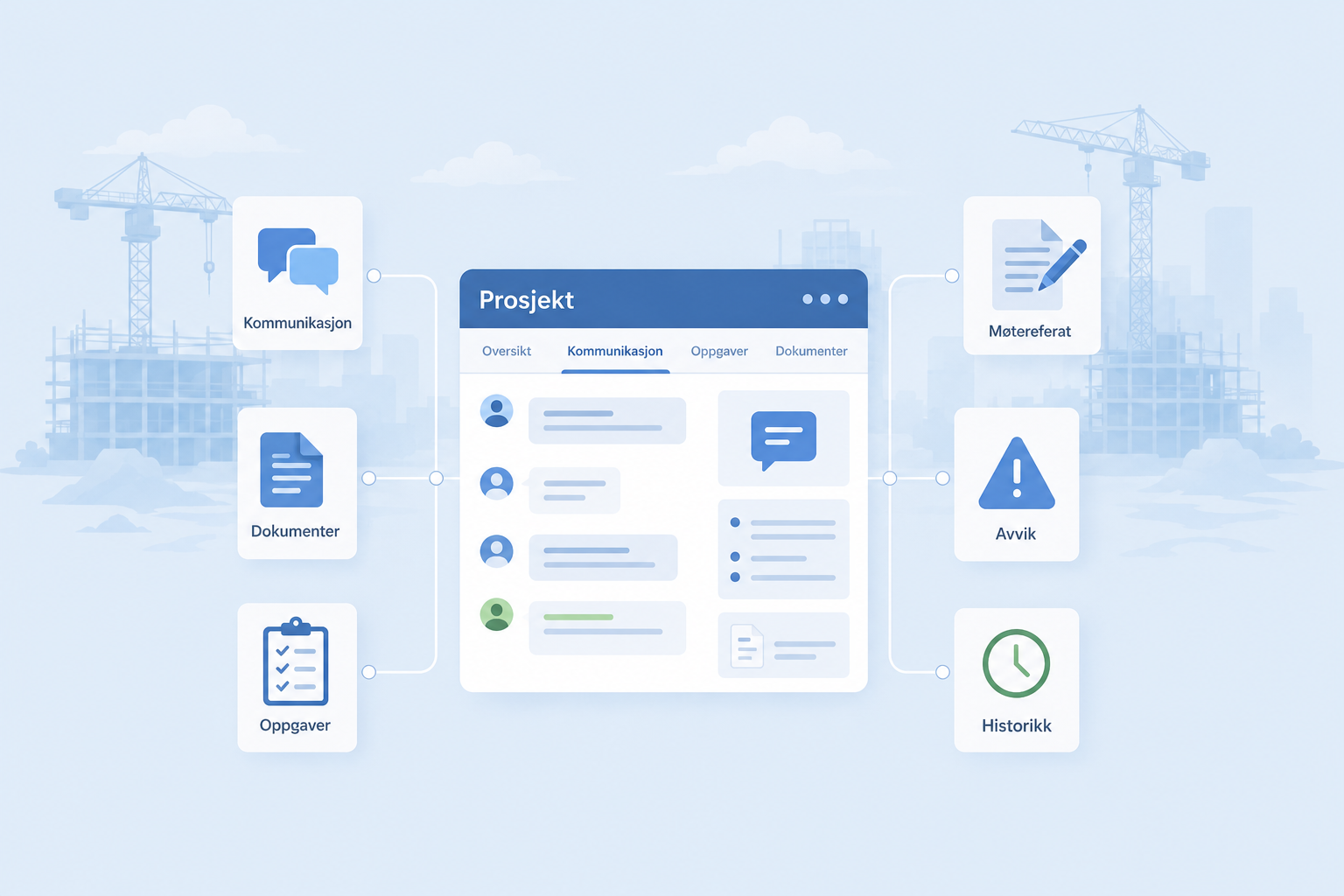
Good communication is essential to the success of construction projects, yet communication is often one of the biggest sources of misunderstandings, delays, and conflicts.
The problem is not necessarily that people don't talk enough, but that important information often ends up in the wrong place. A message is given verbally on the construction site, a picture is sent by SMS, a clarification is in an email, a decision is made in a meeting, and a deviation is recorded in another system.
Individually, this may seem manageable. But as the project grows, it becomes difficult to keep track of what has actually been agreed upon, who is responsible, and what needs to be followed up on.
In construction projects, it's often not the lack of communication that causes problems. It's the lack of traceable communication.
What is not documented can quickly cause problems later.
Why communication becomes difficult in construction projects
Construction projects involve many actors.
Often, several disciplines, companies and roles are involved simultaneously:
builder
contractor
project manager
subcontractors
advisors
suppliers
performing profession
controllers
Everyone needs the right information at the right time.
At the same time, communication often takes place in many different channels:
email
telephone
SMS
meetings
Teams
drawings
checklists
deviation systems
document folders
The more channels the project uses, the greater the risk that important information will be lost, misunderstood, or not documented.
It may work at the start of the project.
But when more changes, more clarifications, and more people come into the project, it quickly becomes more difficult to know what actually applies.
What is not documented will cause problems later.
Many communication problems in construction projects are not noticed immediately.
They often appear later.
When someone asks:
Who approved this change?
When was this clarified?
Which drawing did the message apply to?
Was the deviation followed up?
Who was responsible for the task?
Was this an order, a recommendation or just a discussion?
If the communication is not documented, it will be difficult to respond.
The project may then end up with disagreements, duplication of work, delays or financial demands.
What seemed like a small verbal clarification in the moment could become a big problem later if no one can trace back to what was said.
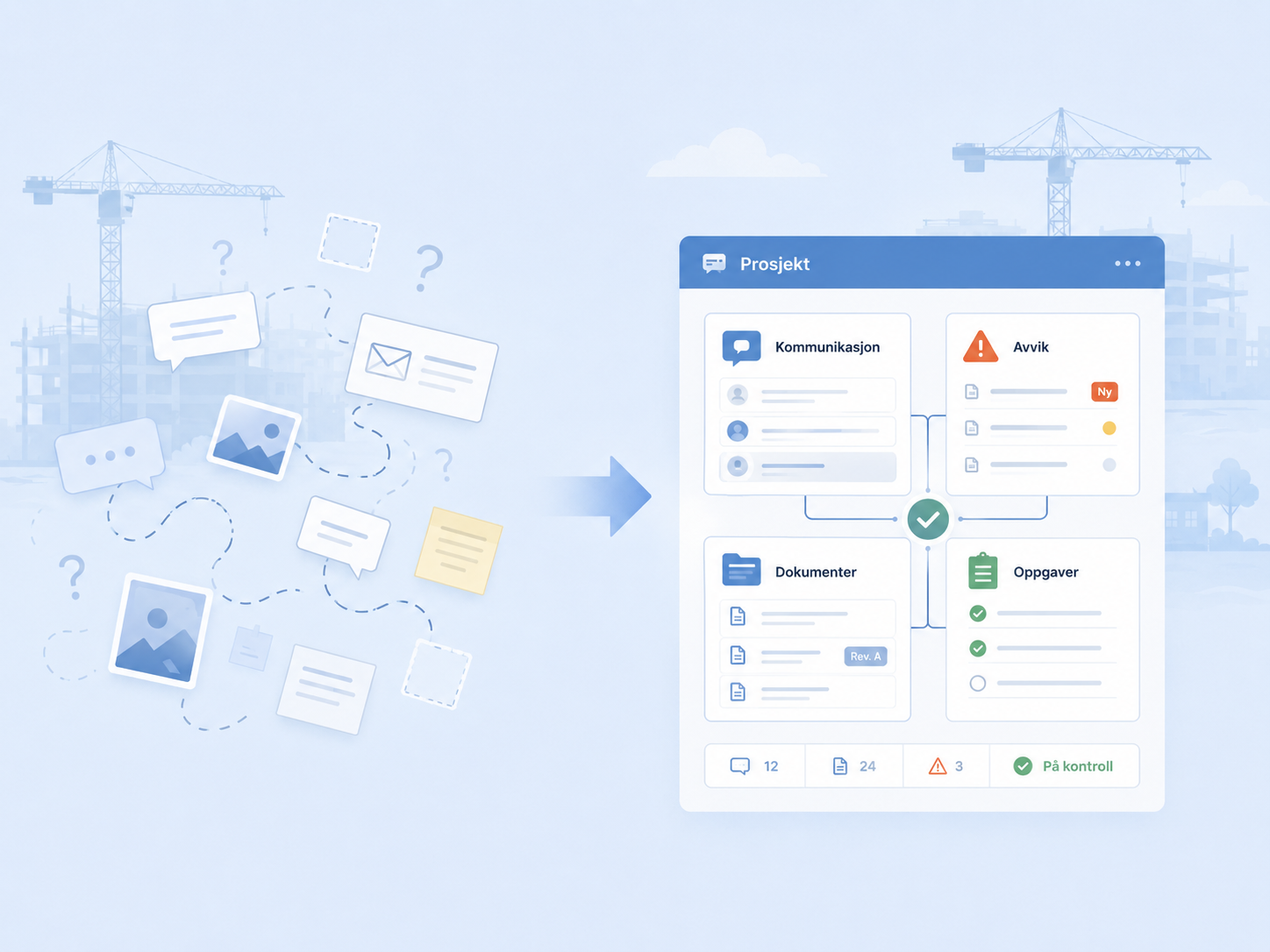
Communication must be connected to project management
Good communication is not just about sending messages.
It's about connecting communication to the work that actually needs to be done.
A message should be able to be linked to:
a task
a deviation
a change
a drawing
a document
a checklist
a deadline
a responsible person
Then communication becomes part of project management, not just loose messages on the page.
When the dialogue is connected to the right issue, it becomes easier to understand:
what the message is about
who is responsible
what is agreed
what needs to be done next
which documentation belongs
For a broader review of how projects can be better managed from start to finish, read our complete guide to project management in construction.
From verbal clarifications to traceable history
In construction projects, history is important.
It must be possible to find back to:
what was said
who said that
when it was said
what was it about
what decision was made
what was done next
This is especially important when it comes to changes, deviations, additions, deductions and documentation.
When communication is collected in the project, the team gets a common history.
This makes it easier to follow up along the way, but also to document the project afterwards.
Without history, the project becomes more vulnerable.
With history, it becomes easier to understand why decisions were made, what was delivered and who was responsible.
When communication and documentation are linked
Communication and documentation should not be treated as two separate things.
In many construction projects they are closely linked.
A message can apply to a drawing.
A decision may apply to a change.
A picture can document a discrepancy.
A clarification could affect progress.
If the dialogue is in one place and the documentation in another, it becomes difficult to see the connection.
Therefore, important communications should be linked to the correct document, task, or case.
This makes it easier to see what has happened, what is relevant now and what needs to be followed up on.
Typical problems when communication is scattered
When communication is not structured, the same problems often arise again and again.
For example:
important messages are in private inboxes
images are sent without a link to the project or case
decisions are made verbally without documentation
clarifications are left in meeting chat or SMS
old drawings are used because the last message did not reach everyone
Deviations are discussed but not followed up
responsibility becomes unclear because the task is not registered
This not only creates a poorer overview.
It can also lead to more follow-up work, weaker documentation and a greater risk of conflicts.
In construction projects, communication is therefore not just about efficiency.
It's also about control.
Do you want to gain better control over communication in construction projects?
See how buildit brings together tasks, deviations, documentation and dialogue in one project surface.
Communication in case of changes and deviations
Changes and deviations are areas where good communication is especially important.
When something changes, it must be clear:
what has changed
who approved the change
what consequences it has
whether it affects time, cost or quality
Who is responsible for follow-up?
The same applies to deviations.
A deviation should not just be recorded.
It must be communicated, followed up and documented.
If the dialogue around the deviation is spread across emails, telephone calls and meetings, it can be difficult to see what was actually done.
Therefore, communication about changes and deviations should be closely linked to the project's follow-up.
You can read more about this in our articles about change management in construction and deviations in construction projects.
Better communication leads to better progress
Communication also affects the progress of the project.
When information doesn't reach the right person at the right time, tasks can stall.
A clarification is missing.
A drawing is outdated.
A decision has not been communicated.
A supplier is waiting for a response.
Small delays can quickly affect multiple subjects and activities.
When communication is linked to tasks, responsibilities and deadlines, it becomes easier to see what needs to be followed up.
The project manager gets a better overview.
Executives receive clearer messages.
And the team spends less time searching for information.
How digital project management can help
Digital project management systems can make communication more structured.
Instead of information being scattered in emails, messages, and separate documents, communication can be linked directly to the project's work.
It makes it easier to:
collect dialogue in one place
follow up on responsibilities and deadlines
document decisions
find back to history
reduce misunderstandings
ensure better handover
The goal is not to remove dialogue from everyday life.
People should still talk to each other, clarify things and solve problems quickly.
But important information should not be lost in loose conversations.
It should be documented where the project is actually managed.
How buildit supports communication in construction projects
In buildit, communication can be linked to the actual work of the project.
Dialogue, tasks, documentation, deviations and progress can be collected in the same project area, so that the information is not scattered across different channels.
This gives the project team a better overview of:
what is agreed
who is responsible
what is done
what remains
which documentation belongs
When communication becomes part of project management, it also becomes part of the project's history.
This makes it easier to follow up on the project along the way and document the work afterwards.
From loose messages to better project control
Communication in construction projects is not just about keeping people informed.
It is about ensuring that important information is understood, followed up and documented.
When communication is scattered, the project becomes more vulnerable.
When connected to tasks, deviations, documentation and progress, the project team gains better control.
What is documented can be followed up.
What is collected can be found again.
And what is traceable creates less uncertainty later.
Do you want to gather communication and project follow-up in one place?
Book a demo and see how Buildit helps construction projects with better overview, traceability and control.
