
Forecasting in construction projects – how to uncover deviations before they become costly
Many construction projects look profitable – until they are not.
The problem is rarely the accounting.
The problem is that deviations are detected too late.
When cost increases, delays and changes first become visible in the final settlement, it is already too late to do anything about them.
Forecasts are therefore about one thing:
to detect deviations early – before they become costly.
👉 For a comprehensive understanding of project management in construction, read our complete guide to project management.
What is a forecast in construction projects?
A forecast is an assessment of where the project is headed – based on its current status.
It provides answers to questions such as:
What will the project cost in total?
Are we likely to make or lose money?
Where is the risk in the project right now?
Unlike accounting, which shows what has already happened, forecasting shows what is likely to happen next.
The difference between budget, accounting and forecast
To understand forecasts correctly, one must distinguish between three concepts:
Budget = plan
Accounting = what is spent
Forecast = what we expect it will cost
The budget is set before the project starts.
The accounts show history.
The forecast shows the direction ahead.
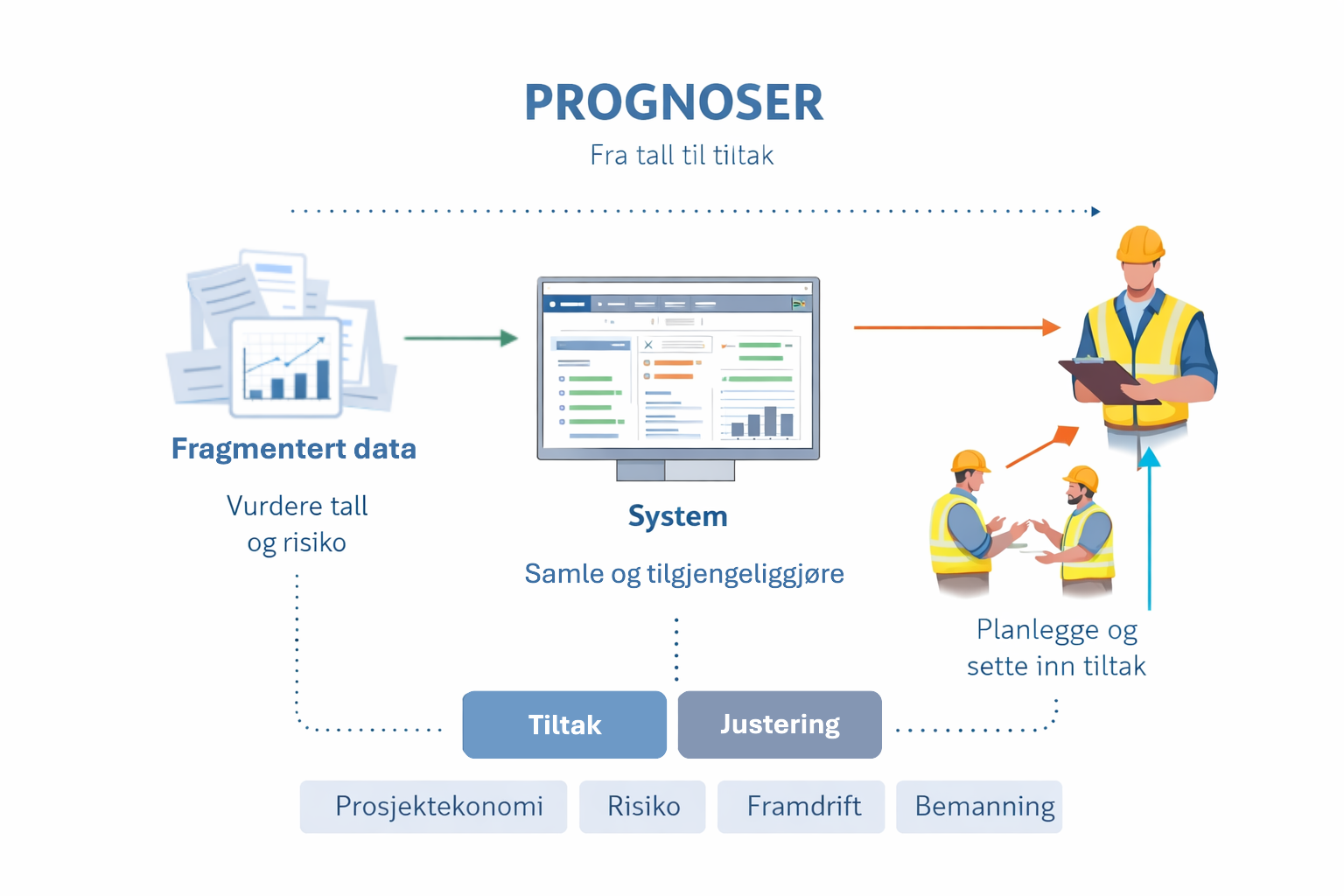
👉 Here's how you can understand the difference in practice:
Why deviations are often detected too late
Most losses in projects do not occur suddenly.
They develop over time:
small delays in progress
changes that are not captured
increased costs that are not updated
risk that is underestimated
Without forecasts, these signals are often overlooked.
The result is that:
measures are taken too late
decisions are made on the wrong basis
the margins gradually disappear
👉 Read more: Project economics in construction
What a good forecast is actually based on
A forecast is not a guess – it must be based on real conditions in the project.
It should always be based on:
Progress – what has been done and what remains to be done
Actual costs – what has been spent so far
Changes – approved and pending
Deviations – errors, delays and extra work
Risk – what could affect the project going forward
When these are linked, the forecast becomes a tool for management – not just reporting.
👉 Read more: Risk and uncertainty in construction projects
How to use forecasts to detect deviations early
Forecasts only provide value when they are actively used.
In practice, this means:
update the forecast regularly
connect it to progress and production
include changes and deviations continuously
use it in decisions – not just reporting
A good prognosis makes it possible to detect:
cost variances before they grow
delays before they affect the end date
risk before it materializes
Common mistakes in working with forecasts
Many projects have forecasts – but get little value from them.
Typical errors are:
the forecast is equal to the budget
it is updated too infrequently
it is not connected to propulsion
changes are not included
it is used for reporting purposes only
The most common mistake is not that the forecast is wrong.
It's that it's not used.
The connection between forecasts, deviations and changes
Forecasts are closely linked to how the project handles:
deviation
changes
documentation
If deviations are not recorded:
→ the forecast is wrong
If changes are not considered:
→ you lose control over costs
Forecasts therefore only work when they are part of comprehensive project management.
👉 Read more: Change management in construction projects
Forecasts as a management tool – not post-reporting
Many people use forecasts as a way to explain what has happened.
That's wrong.
Forecasts should be used to:
identify problems early
consider consequences
take action
When forecasts are used correctly, the project moves from being reactive to becoming proactive.
Digital tools and forecasts
Forecasts can be created in Excel, but the challenge arises when:
data is scattered
progress is not updated
changes not connected to economics
information is not available
Digital tools make it easier to:
gather information in one place
update forecasts continuously
link progress, cost and variance
get a better basis for decision-making
When data is updated and collected, it becomes easier to detect deviations early.
In summary: Forecasting is about uncovering deviations early
A good prognosis:
shows where the project is headed
uncovers deviations before they become costly
provides a basis for correct decisions
contributes to better profitability
Forecasts are not about explaining the past –
but about managing the future.
