
Many in the construction industry believe that an enterprise resource planning system is the same as an ERP system.
It is a common misconception.
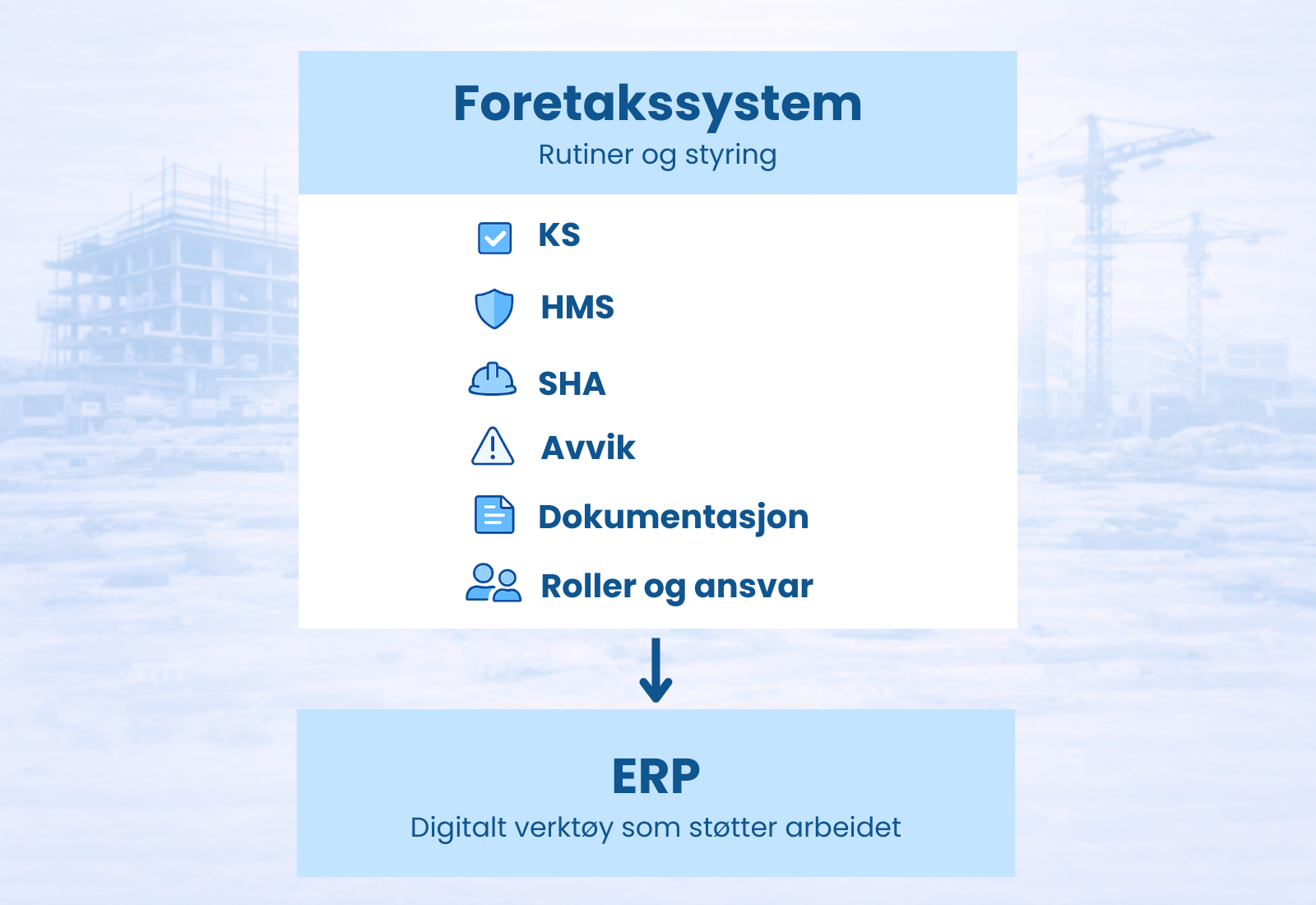
The difference between an enterprise system and ERP is that an enterprise system describes how the company works with quality and routines, while an ERP system is a digital tool that can support these work processes.
Many companies believe that an ERP system alone covers the requirements for an enterprise system.
This can lead to deviations during inspections or lack of documentation in projects.
In the building regulations, an enterprise system means something completely different than a digital management system.
In short:
Enterprise system
→ describes how the company works
ERP system
→ is a tool that can support this work
👉 If you want a comprehensive understanding of project management in construction, you can read our complete guide to project management.
What is an enterprise system in construction?
In the construction regulations, the term enterprise system is used to refer to the enterprise's overall system of routines and aids that ensure quality in the work.
The system should make it possible to document how the company meets the requirements of the regulations.
An enterprise system typically consists of:
quality assurance procedures
roles and responsibilities in the organization
HSE and SHA routines
deviation management
document management and traceability
The system must be relevant to the company's tasks, structured and retrievable, and it must be anchored in management.
👉 Read more about how enterprise systems work in practice in our article about enterprise systems in construction.
What is an ERP system?
An ERP (Enterprise Resource Planning) system is a digital system used to manage various parts of a business.
In buildings, such systems can be used for, among other things:
project management
finance and invoicing
resource planning
document management
reporting
ERP systems are therefore primarily technological tools that help businesses structure information and work processes.
👉 Read more about how structure is actually used in projects in the article about project management in practice.
The main difference
The easiest way to understand the difference is like this:
Enterprise system
→ describes how the company works
ERP system
→ is a tool that can support the work
An ERP system can help with structure, documentation and traceability, but it does not meet the requirements of an enterprise system alone.
In many businesses, the systems already exist, but they are not always connected in practice. Read more about how HSE, KS, SHA and project management are connected in construction.
It is the routines and work processes in the enterprise that constitute the system itself.
Why this is important in practice
When applying for liability rights or during inspections, the municipality assesses, among other things, whether the enterprise has a system that ensures quality in design and execution.
It is typically considered whether:
Routines exist and are documented.
the routines are adapted to the company's role
quality assurance is actually used in the projects
the work can be documented
A digital system can make this easier, but the responsibility still lies with the company.
How ERP can support the enterprise system
Although ERP and enterprise systems are not the same, digital tools can be useful in supporting the work.
For example, a system can contribute to:
better documentation
traceability in projects
structure of routines and documents
easier follow-up of deviations
When used correctly, digital tools can therefore be a good tool for keeping the enterprise system alive in practice.
In summary
The difference between enterprise system and ERP can be summarized simply:
Enterprise system describes how the enterprise ensures quality in its work.
ERP is a digital tool that can support this work.
A company may use different systems and tools, but it is the routines, responsibilities and quality assurance within the organization that constitute the company system itself.
Many businesses choose to use project management systems that collect documentation, deviations and follow-up in one system, making the work easier to follow up in practice.
