
All construction projects – regardless of size – follow a structure.
This structure is usually divided into three main phases:
startup
implementation
termination
Understanding these phases is crucial to being able to plan, organize and execute projects well.
👉 Read more in our complete guide to project management in construction.
What are the project phases?
The project phases describe how a construction project develops from idea to finished building.
Each phase has:
own activities
own deliveries
own requirements for follow-up
The phases build on each other, and together form the project's lifecycle.
This is how a construction project is typically structured:
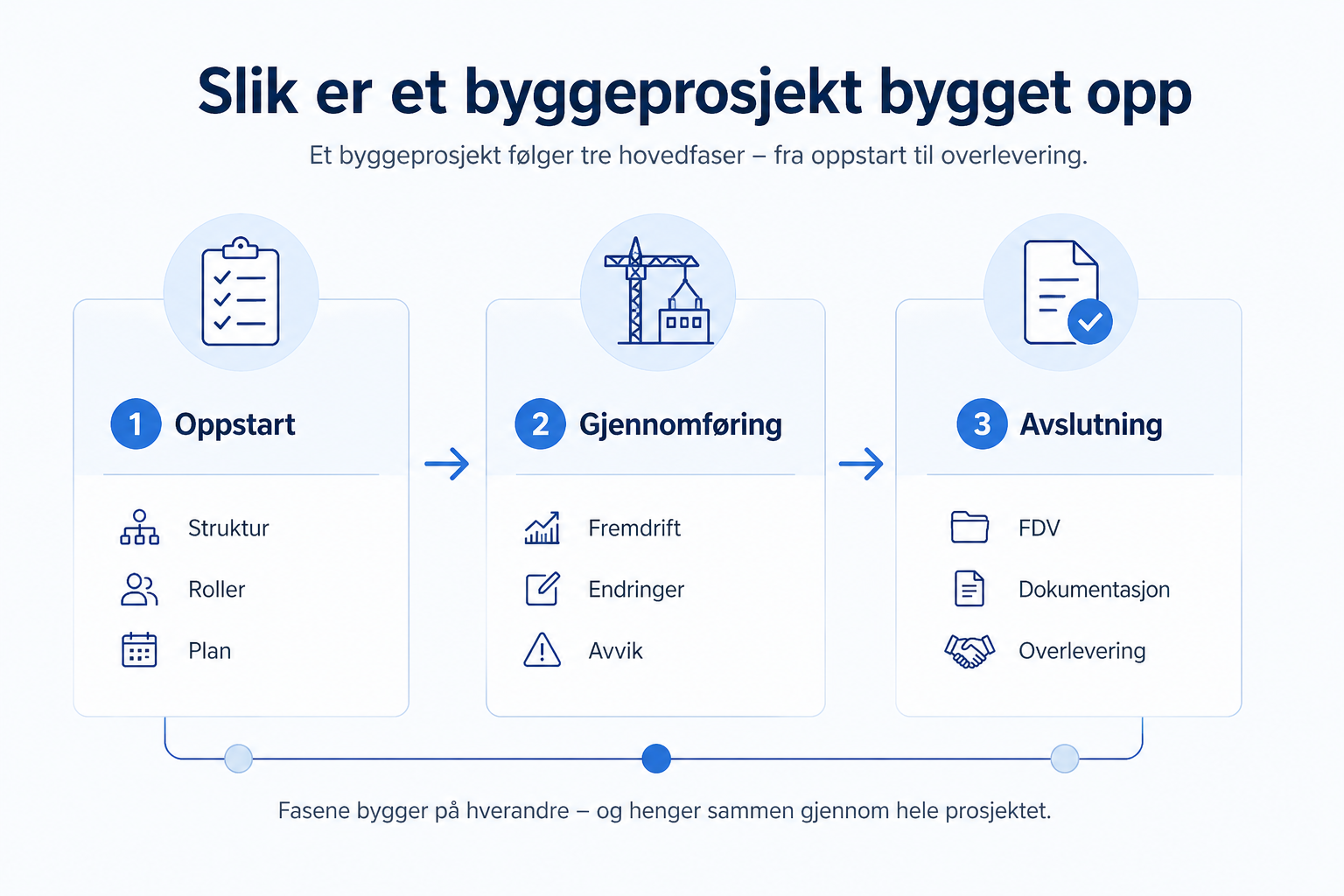
The project moves from planning to implementation and finally handover.
1. Start-up – establishing the project
The start-up phase marks the transition from plan to implementation.
This is where the project's framework and structure are established.
What happens at startup?
This phase defines, among other things:
project goals and scope
organization and roles
progress schedule
documentation requirements
structure for follow-up
This forms the basis for the rest of the project.
👉 Read more about roles and responsibilities in construction projects.
👉 Read more about progress plans in construction projects.
2. Implementation – production and follow-up
The implementation phase is the actual construction period.
This is where the work is carried out and the project develops in practice.
What happens in the implementation phase?
Here the project is working continuously on:
progress and coordination
follow-up of work
change management
registration of deviations
documentation
The activities take place in parallel and must be followed up throughout the project.
👉 Read more about non-conformance management in construction.
👉 Read more about change management in construction projects.
3. Closing – completion and handover
The closing phase marks the end of the project.
Here the work is completed and delivered to the client.
What happens in the closing phase?
This phase includes:
completion of work
final checks
documentation (FDV)
handover
Everything done in the project must be documented and transferred.
How the phases are related
The phases are not isolated.
They are closely linked throughout the project:
startup lays the foundation
implementation builds on
conclusion collects the result
Information, decisions and documentation follow the project through all phases.
The connection with project management
Project management is about:
plan in startup
follow up on implementation
document in conclusion
When this is done in a structured way, the project becomes easier to organize and implement.
👉 Read more about how project management works in practice in construction projects.
The project phases in practice
In practice, the phases often overlap.
For example:
planning can continue into implementation
documentation is done along the way
preparations for handover start early
This makes it important to see the phases as a whole – not as separate steps.
Common challenges between phases
Although the project phases are clear in theory, challenges often arise in the transition between them.
Typical examples:
the start-up is not clearly defined enough
the implementation lacks structured follow-up
documentation is only collected in the closing phase
This is rarely about a single phase –
but about how they are interconnected throughout the project.
In summary
The project's construction phases consist of:
startup – establishment of structure
implementation – execution of work
closing – completion and handover
The phases describe how the project develops – from plan to completed construction.
Do you want to work more structured throughout all phases of the project?
When progress, documentation and follow-up are combined in one solution, it becomes easier to follow the project from start to handover.
👉 See how my project supports the entire project lifecycle.
